
Hiking guides and maps on the GR®65
GR®65 – The Way of St James
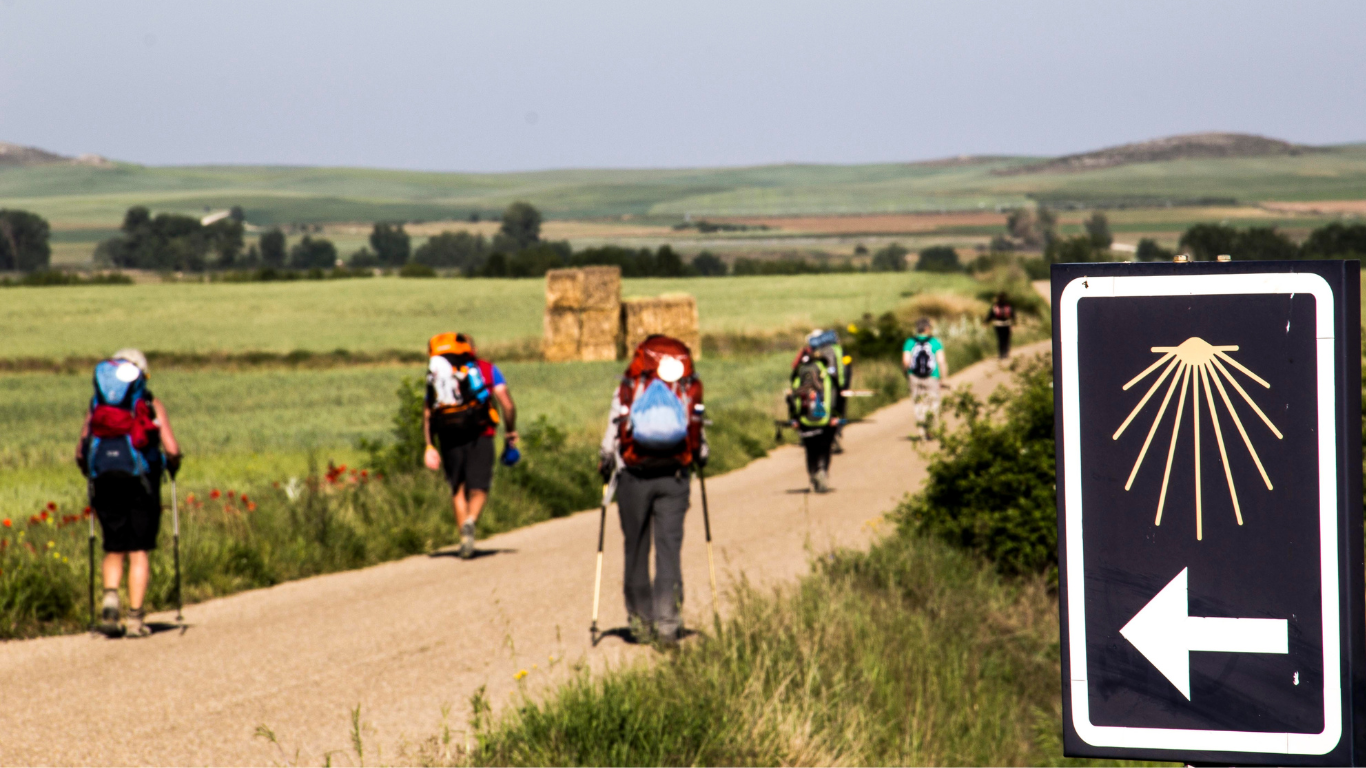
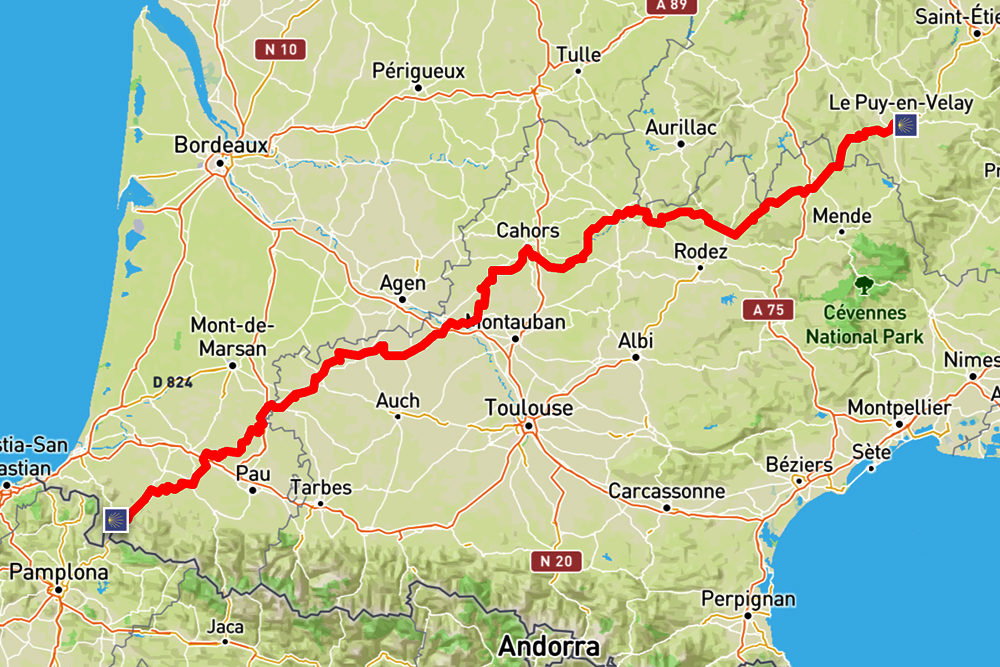
From Le Puy-en-Velay to Saint-Jean-Pied-de-Port, the GR®65 is a 750-kilometer walk in the footsteps of pilgrims. This historic route, also known as the Via Podiensis/Voie du Puy, attracts thousands of walkers every year who come to enjoy a unique experience, combining spirituality and nature.
The GR®65, the emblematic Way of St. James
The GR®65 is so popular among the Santiago de Compostela routes, thanks in part to its diverse landscapes and the warm welcome extended to hikers throughout its journey. Starting from Le Puy-en-Velay, famous for its cathedral perched on a volcanic rock, the route immerses hikers in a path steeped in history and tradition.
The trail first crosses Velay, with its gently volcanic slopes, before approaching Margeride and its forested landscapes. Then comes Aubrac, a wild plateau dominated by vast meadows and transhumance herds. As the kilometers pass, Quercy and the Lot Valley reveal a medieval heritage, marked by hilltop villages, vineyards, and paths lined with drystone walls.
After crossing the gentle rolling landscapes of the Gers, the GR®65 finally reaches the Pyrenees, offering a physical challenge with the emblematic passage of the Roncevaux Pass, the gateway to Spain.
To successfully complete your walk on the GR®65, it’s essential to be equipped with an IGN map or a topo-guide. The red and white markings, typical of the GR®, make it easier to find your way, but having a paper document detailing the stages, distances, possible variations, as well as accommodation and water points, will help you throughout the route.
Why take the GR®65 to reach Santiago de Compostela ?
- A cultural immersion in France’s medieval heritage.
- Exceptional natural diversity, including mountains, plateaus, and verdant valleys.
- A well-structured itinerary, with a variety of accommodation options: lodges, B&Bs, pilgrim shelters, and more.
Walking the Puy route is like taking a break from time and getting back to basics.
What to see on the GR65?
This path is punctuated by stages that are absolutely worth discovering:
- Le Puy-en-Velay : the historic and spiritual town, the starting point.
- The Aubrac Plateau : vast wildernesses, known for their pastoral tradition.
- Conques : a Romanesque jewel listed by UNESCO, a key stage of the trail.
- Cahors and the Lot Valley : hilltop villages, steep cliffs, and famous vineyards.
- Moissac : the abbey and Romanesque cloister, an emblematic site of French medieval heritage.
- Saint-Jean-Pied-de-Port : the last stop before Spain, at the foot of the Pyrenees.
Each of these stages allows hikers to fully experience the journey, between contemplation, discovery of heritage and enriching encounters.
Routes connected to the GR®65
The GR®65 is not limited to a simple route: it crosses or joins several major paths which further enrich the experience of the pilgrimage :
- GR®654 – Vézelay Route : From Vézelay to Montréal-du-Gers, it connects with the GR®65 and offers a varied approach.
- GR®653 – Arles Route : From the southeast, it joins Ostabat, near Saint-Jean-Pied-de-Port. This is one of the major routes on the Camino de Santiago.
- GR®655 – Paris and Tours Route : The historic route starts in Paris, passes through Tours and Bordeaux before reaching the Pyrenees.
These paths are alternatives that offer the possibility of creating an itinerary, according to the desires and objectives of each walker.
Feel free to discover our other guides and maps to explore more of the Camino de Santiago hike.