
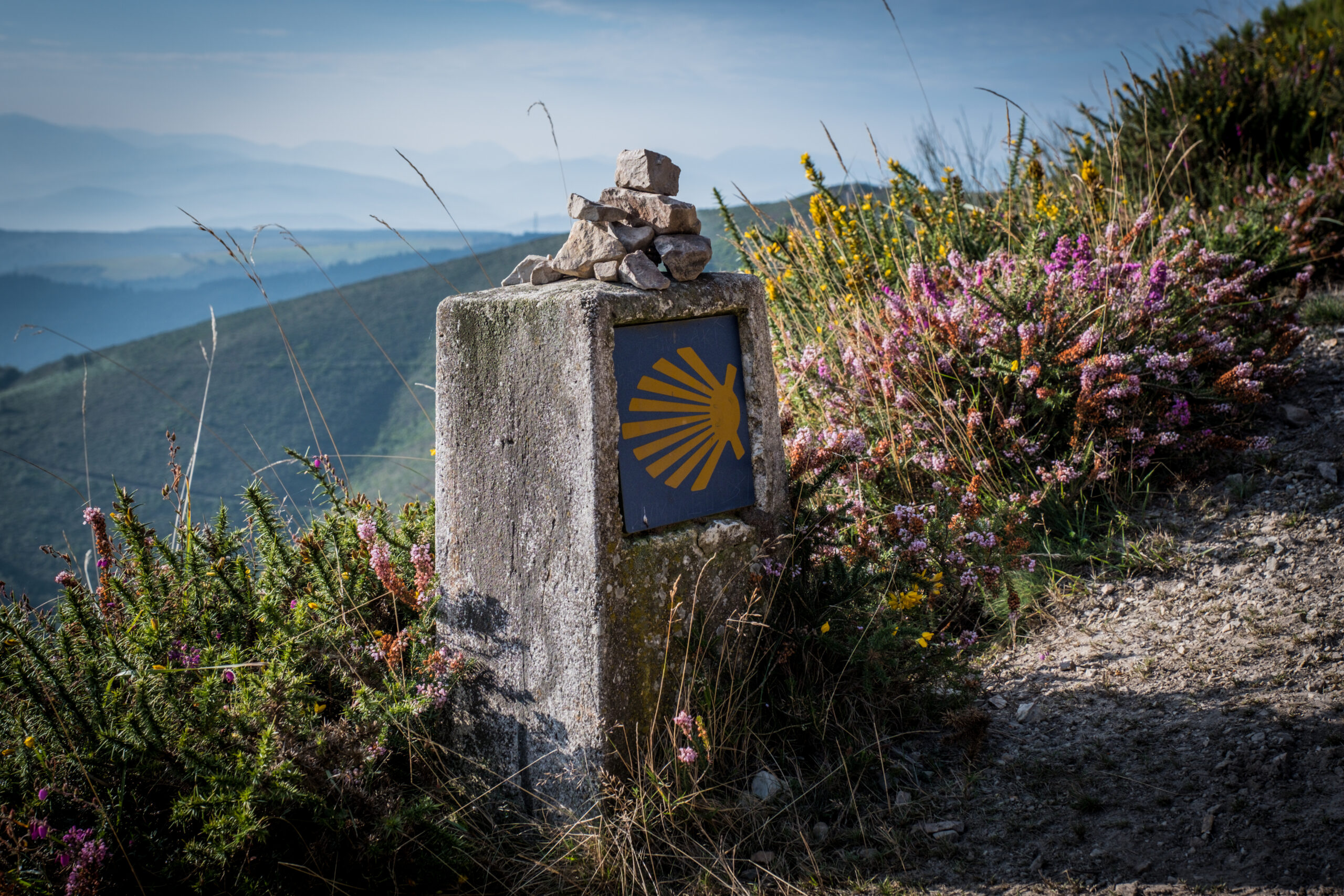
The Way of St. James
Prepare your Way of st.James
In this section, we’ve compiled a selection of guides, maps, topoguides, and hiking maps dedicated to the Camino de Santiago or Santiago Ways. Whether you’re looking for a specific route or a guide from a specific publisher, the Carto Team is here to help: don’t hesitate to contact us if you can’t find what you’re looking for; we’ll do our best to help.
Compostela, a historic pilgrimage route
The Camino de Santiago is a network of pilgrimage routes leading to the Cathedral of Santiago de Compostela in Spain. Tradition has it that the body of the Apostle James was discovered there in the 9th century, making it a major pilgrimage site for medieval Christianity. After a period of decline, the routes experienced a dramatic revival in popularity starting in the 1980s and are now traveled by hundreds of thousands of pilgrims and hikers each year.
You won’t find a single starting point for the Camino de Santiago or the Way of St. James, as there are a multitude of routes across France, Spain, Portugal, and more.
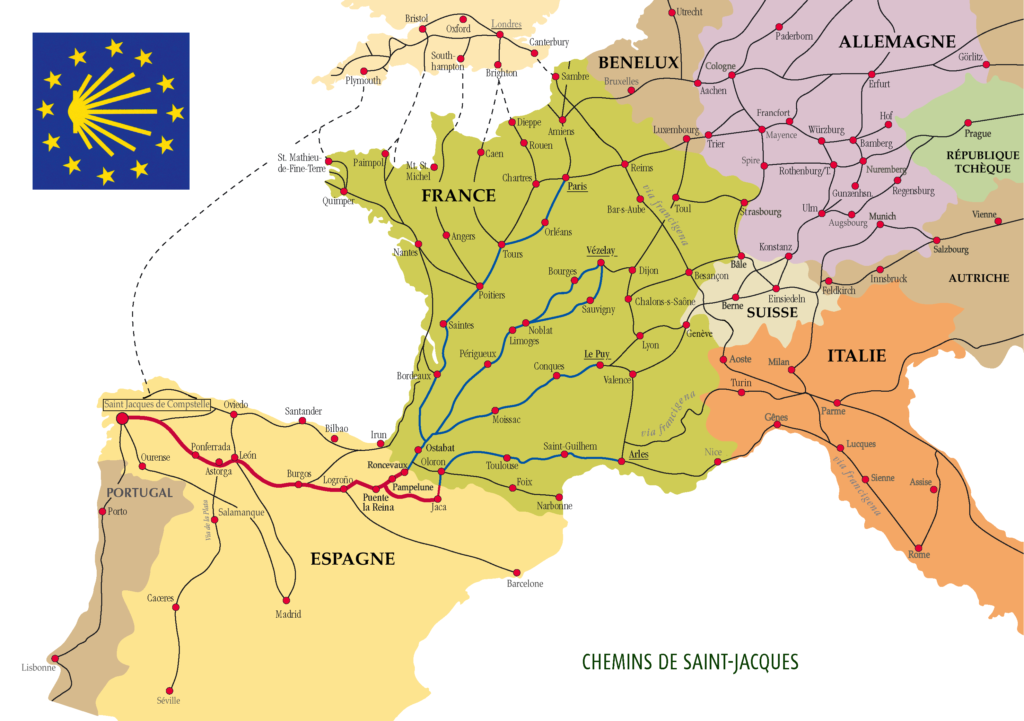
Les intérêts touristiques et culturels du Chemin de Compostelle
There are so many things to see along the Camino de Santiago that it’s impossible to list them all. Here are a few iconic stops we’ve selected that shouldn’t be missed.
- Saint-Jean-Pied-de-Port in the Pyrénées-Atlantiques : This medieval village is the starting point of the famous Camino Francés. A gateway to Spain, it embodies the spirit of pilgrimage, combining mountains, tradition, and fervor.
- Conques in Aveyron : Nestled in lush greenery, Conques is a gem of Romanesque architecture, known for its Sainte-Foy abbey, its treasure trove of goldwork, and its stained-glass windows by Soulages.
- Le Puy-en-Velay in the Haute-Loire : A famous starting point of the Via Podiensis, the town impresses with its cathedral perched on a volcanic rock. It is one of the highlights of French religious heritage.
- Rocamadour in the Lot : Perched on its cliff, this sanctuary has attracted pilgrims and visitors since the Middle Ages. The Black Virgin is notably venerated here.
- Moissac in Tarn-et-Garonne : Known for its abbey and cloister, among the most beautiful in Europe, Moissac is an essential stop for lovers of Romanesque art.
- Pamplona, Navarre : The first major Spanish city on the Camino Francés, Pamplona combines festivities, heritage and gastronomy in a unique atmosphere.
- Logroño, La Rioja : The capital of Spanish wine, it offers an ideal gourmet break. Its lively neighborhood and tapas delight all pilgrims.
- Burgos, Castile and León : Its Gothic cathedral is a UNESCO World Heritage Site. An architectural gem that’s well worth the visit.
- León, Castile and León : A city with a strong identity, where the stained-glass windows of its cathedral sit alongside lively streets and a remarkable religious heritage.
- Cruz de Ferro, near Astorga : A symbolic place on the way: pilgrims place a stone from their homes there, a strong gesture of letting go.
- Galicia : The finish line is approaching, the landscapes are becoming greener, the villages more intimate, the atmosphere more solemn. A unique atmosphere before the grand finale.
- Santiago de Compostela, Galicia : Emotions reach their peak in the Praza do Obradoiro, opposite the cathedral. This is where the journey ends or a new adventure begins.
Create your Way of St. James
The Camino de Santiago is a veritable network of roads, with numerous itineraries offering you several possibilities. Here are a few :
- The Puy Route (Via Podiensis): The most popular and undoubtedly the most iconic. From Le Puy-en-Velay to Saint-Jean-Pied-de-Port, it crosses Aubrac, the Lot Valley, Quercy, Gers, and more.
- The Arles Route (Via Tolosana): A southern route starting from Arles, rich in light and heritage, reaching Spain via the Col du Somport.
- The Vézelay Route (Via Lemovicensis): Less frequented, it offers superb landscapes crossing Burgundy, Limousin, and Périgord, before reaching the Pyrenees.
- The Tours Route (Via Turonensis): This route begins in Paris or Tours and crosses western France. Perfect if you want to explore the Loire Valley or the Landes region.
And for those who like walking but don’t want to follow a proper pilgrimage route:
- The Stevenson Trail (GR70): Outside the Camino de Santiago, but perfect for a first-time backpacking experience. It follows in the footsteps of Scottish writer Robert Louis Stevenson through the Cévennes.
- The Nantes-Brest Canal / Blavet Canal: If you prefer cycling or walking along the water, these Breton trails are ideal. Although not directly connected to the Camino de Santiago, they provide a great warm-up.
Whether you’re planning a 100-km Camino de Santiago or the full route from France, here you’ll find MIAM MIAM DODO guides and maps, Lepère guides, or FFRP topoguides to help you plan your adventure with complete peace of mind.
And you, which route to Santiago de Compostela will you choose for your next departure?